Monitoring and Countering Toxic Speech Online and Beyond: Challenges and Promises from a Computational Linguistics Perspective

In recent years, abusive language and in particular the phenomenon of online hatred against marginalized and vulnerable groups are exponentially increasing in social media platforms becoming a relevant social problem that needs to be monitored. Computational linguistics techniques have been applied to monitoring and counteracting toxic speech online, with particular emphasis on the development of linguistic resources and automatic tools for analyzing, detecting, and contrasting various forms of abusive language, ranging from anti-immigrants discourse to sexist and misogynistic behaviors. The research field encompasses several challenges that will be discussed. The targeted nature of online hatred and the multilingual environment pose challenges related to the development of robust approaches for abusive language detection in multidomain and multilingual settings. Pragmatic aspects associated with the use of profanity must also be addressed. Moreover, abusive language is often expressed and to be interpreted in the context of widespread social phenomena of stereotyping and gender/ethnic discrimination, and we are interested in recognizing implicit forms of abusive language. A recent challenge is overcoming the risks of both over-moderation and under-moderation. This has highlighted the need to better understand what is perceived as hateful and what is not by communities target of abusive language. Additionally, there has been a recent interest towards developing more inclusive approaches that actively involve target groups. This shift includes a growing focus on underrepresented languages and communities, encouraging researchers to more actively consider ethical issues, and to implement community-based approaches for developing and benchmarking NLP models in specific languages which also implies the need to envision and design new evaluation frameworks. Two key lines of reflections will be proposed. The first line addresses the challenges related to the need of applying semantic grids of finer-grained analysis, encompassing the examination of intersectional hatred expressions and the identification of underlying phenomena, such as stereotypes, prejudices, unintended biases, and subtle forms of linguistic behaviour that contribute to perpetrating discrimination and injustice. In this context, the importance of inclusive design in corpora development will be discussed, aiming to incorporate the perceptions and perspectives of marginalized groups, in accordance with new approaches to NLP, such as perspectivism and FATA (First Ask Then Act!). On the other hand, we will delve into the potential of leveraging computational linguistics methods and language technologies to actively facilitate interventions against online hate speech. This involves, on the one hand, the creation of positive counter-narratives, dedicated to raising awareness about toxic discourse online and empowering individuals facing discrimination to express themselves both in virtual and real-world settings, on the other hand, the creation of tools for supporting the use of gender-fair language for promoting gender equality by using terms and expressions that include all identities and avoid reinforcing gender stereotypes.
Viviana Patti

Full professor at the Department of Computer Science of University of Turin, head of the PhD program in Computer Science, and member of the scientific committee of the Interdepartmental Centre for Logic, Language and Cognition since its foundation

Viviana Patti is full professor at the Department of Computer Science of University of Turin, head of the PhD program in Computer Science, and member of the scientific committee of the Interdepartmental Centre for Logic, Language and Cognition since its foundation. She is president of the Guarantee Committee of the University of Turin. She has been vice-president of the board of directors of the Italian Association of Computational Linguistics (AILC) (2022-2025), vice-president of the master’s degree program in Language Technologies and Digital Humanities and vice-coordinator of the inter-athenaeum second-level master HumanAIze, designed to integrate humanistic competences with those necessary to participate in the processes of technological innovation linked to the increasingly pervasive use of AI. She is also Chair of the new Turin ACM-W Chapter (ACM’s Women in Computing).

Her main research interests are in the research area of Artificial Intelligence from the very beginning. Currently, they are centered on Natural Language Processing, Computational Linguistics and Affective Computing, and in particular include sentiment analysis, emotion recognition and irony detection, with a focus on processing social media texts. She is currently involved in hate speech monitoring, with a focus on hatred against immigrants, populist rhetoric, automatic identification of misogyny and stereotypes, and support for the dissemination of gender-fair language, applying computational linguistics techniques in national and international projects, including “Contro l’Odio”, the Google-funded “Be Positive!” and “Sterheotypes” projects. She supervised and supervises a group of PhD students and postdocs on these topics, also in cotutelle with the Universitat Politecnica de Valencia.

She coordinated the European pilot project “EVALITA4ELG: Italian EVALITA Benchmark Linguistic Resources, NLP Services and Tools for the ELG platform” funded by the European Language Grid H2020 project. Within the FAIR project, she coordinated the HARMONIA project (“Harmony in Hybrid Decision-Making: Knowledge-enhanced Perspective-taking LLMs for Inclusive Decision-Making”). She has always been active in the field of evaluation and benchmarking of language technologies as co-organiser of evaluation campaigns for Italian and other languages (EVALITA, Semeval, IberEval) and is one of the organisers of CALAMITA, an AILC initiative specifically aimed at building a benchmark for testing the abilities of LLMs in Italian. She has coordinated several technology transfer projects in collaboration with companies, including: the “M.EMO.RAI” project, which involved research groups from the Department of Computer Science of the University of Turin and the RAI ICT division in the development of a platform to monitor and analyse the emotions, conflicts, debates and passions of tv audiences on social media, using AI techniques; the DEA (Digital, Equity, Actions) project funded by Fondirigenti for the “development of innovative methods and tools to support companies in reducing the Gender Gap in STEM careers, and in a greater participation and managerial qualification of women in STEM fields”. She was involved as senior researcher in the POPULUS (“Multilingual Perspective-Aware NLU”) project in partnership with Amazon Alexa.

She is senior member of the UniTO team in the “Ecosystems for Higher Education Inclusion: connecting underserved communities with higher education through participatory engagement and research methodologies (EHEI)” Marie Skłodowska-Curie Actions (MSCA) Staff Exchanges 2024 project (2025-2028). She is currently coordinating the FAIRLY project for the development of a tool to support writing in gender-fair language based on language technologies, funded as part of the UniTO 2024 participatory budget initiatives. She is also involved in the “Multilingual personalization through perspective-aware Language Modeling” project in partnership with Amazon Alexa, as senior researcher.

She is a member of the “MultiplEYE COST Action”.

She is co-author of +180 papers published in international and national journals and conference proceedings and regularly serves as senior area chair in the scientific committees of computational linguistics and artificial intelligence conferences.

Da Universidade ao Mercado: Construindo a sua história na era da IA

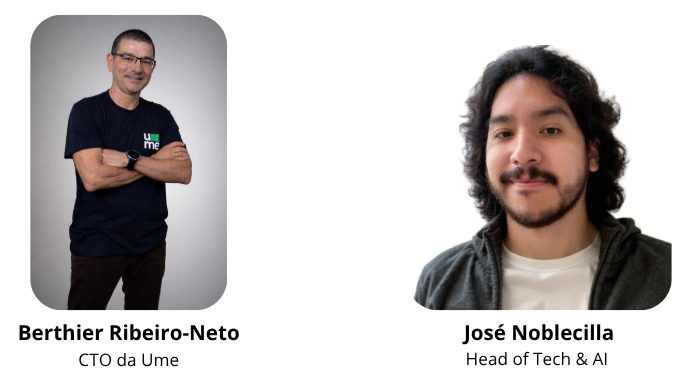
Painel com Berthier Ribeiro-Neto, professor aposentado do Departamento de Ciência da Computação da UFMG, cofundador da Akwan – empresa adquirida pelo Google em 2005 – e responsável, por quase duas décadas, pela liderança da engenharia do Google no Brasil. Atualmente CTO da fintech UME, Ribeiro-Neto discute sua trajetória entre pesquisa acadêmica, empreendedorismo e indústria de tecnologia, com foco nas transformações trazidas pela inteligência artificial ao desenvolvimento de software e nas perspectivas de carreira para a nova geração de engenheiros formados na universidade.

Berthier Ribeiro-Neto
Com trajetória como professor do DCC/UFMG, Berthier Ribeiro-Neto transformou suas pesquisas acadêmicas na criação da Akwan, startup adquirida pelo Google. Após 19 anos liderando a engenharia da big tech no Brasil, assumiu como CTO da fintech Ume, unindo sua bagagem científica à inovação no mercado.

José Noblecilla
José é o Head de Tecnologia e IA no Valor Capital Group, onde lidera as iniciativas estratégicas da empresa em tecnologia e inteligência artificial. Antes de ingressar no Valor, José passou sete anos na Wildlife, onde foi peça fundamental na construção e escalabilidade da equipe de Ciência de Dados. Após seu período na Wildlife, atuou como CTO e cofundador da Arado, uma empresa que posteriormente se tornou um investimento do portfólio do Valor.

A profunda experiência operacional de José na criação e liderança de equipes técnicas, combinada com sua trajetória empreendedora, proporciona uma perspectiva única para identificar e apoiar negócios inovadores no cenário de tecnologia e IA.

Engenheiro de software: o novo maestro

Do SDLC ao IA-DLC – como a ia esta reescrevendo o ciclo de desenvolvimento e o papel de quem constrói software

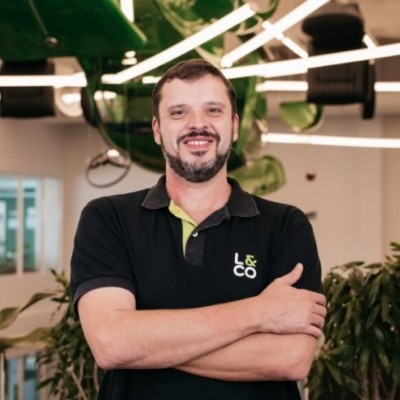
Rodrigo Vieira Costa Cruz

Executivo de engenharia de software e IA na Localiza&CO

Executivo de engenharia de software e IA, certificado em Artificial Intelligence and Data Science for Leaders pela University of Chicago (2024), Rodrigo Vieira Costa Cruz lidera as iniciativas de Inteligência Artificial e Engenharia na Localiza&CO.
À frente de times multidisciplinares, conduz a modernização do ecossistema digital da companhia e as frentes de IA, incluindo a Liza, assistente virtual proprietária reconhecida como um dos primeiros agentes de IA conversacional em escala no setor de mobilidade.
Com duas décadas de experiência em engenharia de software, tendo atuado em empresas como CI&T, SYDLE, EDP e Oi, conecta visão técnica à estratégia de canais digitais, Inteligência Artificial e Revenue Management.

STRONGER TOGETHER: Equipes de Robôs Autônomos no Espaço

E se, em vez de um único rover, enviássemos uma equipe de robôs para explorar a Lua, capazes de se coordenar, dividir tarefas e tomar decisões sozinhos, sem esperar comandos da Terra?

Nesta palestra, a Dra. Maira Saboia da Silva, Robotics Technologist do Jet Propulsion Laboratory (NASA/JPL), apresenta o CADRE (Cooperative Autonomous Distributed Robotic Exploration), uma demonstração tecnológica da NASA/JPL que levará à superfície lunar uma equipe de três mini-rovers (cada um com menos de 10 kg), acompanhados de uma estação-base e uma câmera de consciência situacional. Rumo à região de Reiner Gamma, os rovers operarão durante um dia lunar (cerca de 14 dias terrestres), demonstrando exploração cooperativa e medições científicas distribuídas com radares de penetração de solo (GPR). Uma técnica em que múltiplos robôs, trabalhando em formação, enxergam o subsolo lunar com uma nitidez impossível para um robô sozinho.

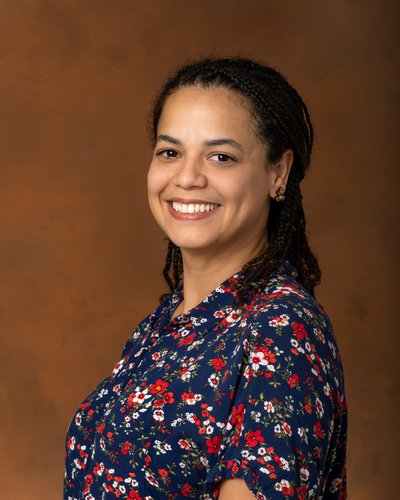
Maira Saboia da Silva

Robotics Technologist no Jet Propulsion Laboratory (NASA/JPL)

Maira Saboia da Silva, Ph.D., é Robotics Technologist no Jet Propulsion Laboratory (NASA/JPL), na Califórnia, onde desenvolve autonomia para equipes de robôs em ambientes extremos; de cavernas subterrâneas à superfície da Lua. Atualmente integra a missão lunar CADRE, que demonstrará exploração cooperativa com uma equipe de mini-rovers autônomos. Foi membro do Team CoSTAR no DARPA Subterranean Challenge, onde liderou a pesquisa em planejamento e manutenção de comunicação para equipes de robôs em ambientes com comunicação degradada. Também atuou no projeto MOSAIC, de autonomia multiagente para balões científicos em Vênus. Brasileira, fez seu doutorado na University at Buffalo (EUA) como bolsista CAPES, com pesquisa em construção autônoma multi-robô em terrenos não estruturados.

Grupo QuintoAndar – Usando IA para ajudar as pessoas a amarem o lugar onde vivem

A visão central do Grupo QuintoAndar é ajudar as pessoas a amarem o lugar onde moram. Para acelerar essa missão em escala, estamos adotando a IA não apenas como uma funcionalidade de produto, mas como um catalisador para uma mudança operacional e arquitetural em toda a empresa. Revisamos drasticamente nosso ciclo de desenvolvimento de produtos e nossas principais práticas de engenharia para integrar a IA desde a base. Isso resultou em melhorias significativas tanto na qualidade de nossas plataformas quanto na velocidade da nossa engenharia. Nesta apresentação, compartilharei exemplos práticos de como a IA está remodelando nossas operações e multiplicando nossa capacidade de concretizar a nossa visão.

Bruno Diniz

Distinguished Engineer at Grupo QuintoAndar

Bruno é Distinguished Engineer no Grupo QuintoAndar, a maior proptech da América Latina. Como líder sênior de engenharia e arquiteto de software, ele é especialista em projetar frameworks e sistemas concorrentes de alta performance e grande escalabilidade. Com profunda experiência técnica em modelos avançados de concorrência, Bruno foca na construção de fundações arquiteturais robustas que permitem o funcionamento e a evolução de aplicações em escala massiva. Atualmente, ele se dedica à interseção entre essas práticas avançadas de engenharia e a Inteligência Artificial, impulsionando melhorias sistêmicas nos produtos do QuintoAndar e acelerando a visão da empresa de ajudar as pessoas a amarem o lugar onde moram.

From Social Network Analysis to Simulating Societies: Recent Research in Computational Social Science at KDD Lab

Computational social science is evolving beyond the analysis of social networks toward the development of computational models capable of reproducing and exploring the dynamics of entire societies. This talk presents recent research from the KDD Lab @ ISTI-CNR, outlining a common vision that bridges the study of online social systems with the emerging paradigm of AI-driven social simulation. The journey begins with network modeling and the analysis of online phenomena, including debate polarization and echo chambers, and the identification of supportive interactions and resilient communities. It then moves to the characterization of Large Language Models as computational models of social cognition, examining their biases, semantic organization through resources such as the LLM World of Words (LWOW) dataset, and their tendency to exploit logical fallacies when debating in multi agent systems. Finally, the talk explores LLM-based social simulations, where generative agents interact within synthetic social environments to investigate the emergence of collective behavior and assess interventions in silico. Together, these research directions illustrate how computational social science is progressing from understanding social networks to building computational models of digital societies.

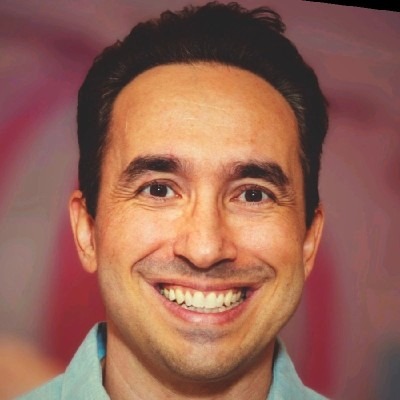
Giulio Rossetti

Senior Researcher at the Institute of Information Science and Technologies (ISTI) of the Italian National Research Council (CNR)

Giulio Rossetti is a Senior Researcher at the Institute of Information Science and Technologies (ISTI) of the Italian National Research Council (CNR), where he leads the Social Network Analysis unit of the KDD laboratory. His work lies at the crossroads of modeling and understanding complex social systems through network science, large-scale online data analysis, and generative AI. His recent research spans online polarization, opinion dynamics, supportive communities, “cognitive” biases of large language models, and IA-powered social simulations.

Como a Inteligência Artificial está transformando a profissão do desenvolvedor de software

Como transformar grandes volumes de dados em inteligência capaz de apoiar decisões reais? A palestra apresenta como a Quaest vem construindo uma infraestrutura tecnológica que combina pesquisas de opinião, dados digitais, modelos de linguagem, RAG, fine-tuning, MCP e sistemas agênticos para interpretar a complexidade do Brasil. A partir de projetos desenvolvidos para empresas, governos e organizações, serão apresentados os desafios técnicos envolvidos na construção de sistemas que não apenas processam informações, mas também incorporam contexto, território, linguagem e comportamento para compreender os diversos Brasis.

Jonatas Varella

Sócio e Diretor de Inovação e Tecnologia da Quaest

Jonatas Varella é sócio e Diretor de Inovação e Tecnologia da Quaest, onde lidera o desenvolvimento de produtos, sistemas e soluções baseadas em dados e inteligência artificial. Mestre em Ciência Política e graduado em Gestão Pública pela UFMG, atua na interseção entre pesquisa, engenharia de dados, estatística e tecnologia. Seu trabalho está voltado à construção de sistemas que combinam pesquisas de opinião, dados digitais, modelos de linguagem e arquiteturas de agentes para transformar problemas sociais complexos em inteligência para empresas, governos, organizações e lideranças políticas.

Como a Inteligência Artificial está transformando a profissão do desenvolvedor de software

A Inteligência Artificial está mudando profundamente a forma como softwares são idealizados, desenvolvidos, testados e operados. Nesta palestra, vamos discutir como ferramentas de IA e agentes inteligentes estão transformando o trabalho dos desenvolvedores, quais atividades tendem a ser automatizadas e quais habilidades se tornarão ainda mais importantes.

A apresentação também abordará a evolução do papel do desenvolvedor, que deixa de atuar apenas como produtor de código e passa a assumir uma posição cada vez mais estratégica na definição de problemas, arquitetura de soluções, validação de resultados e coordenação de agentes de IA. Por fim, serão discutidos os riscos, as oportunidades e os caminhos para que estudantes e profissionais se preparem para essa nova realidade.

Tiago Machado

Diretor de Engenharia de Produto do Inter

Tiago Machado é Diretor de Engenharia de Produto do Inter, onde lidera uma estrutura com mais de mil profissionais de tecnologia. Formado em Ciência da Computação, atua há cerca de 20 anos no desenvolvimento de software, criação de produtos digitais, liderança de equipes de engenharia e transformação tecnológica.

Do código à especificação: como a IA está transformando o papel do profissional de computação

Como a IA está mudando a carreira de quem desenvolve software? Nesta palestra, vamos mostrar como copilots, agentes autônomos e LLMs integrados a produtos já fazem parte da rotina de desenvolvimento e estão redefinindo o perfil dos profissionais que o mercado busca. A partir da experiência da SYDLE de desenvolvimento de produtos, compartilharemos casos reais de aplicação de IA nas nossas soluções e processos internos, além de discutir o que essas transformações indicam sobre o caminho que o mercado tem seguido.

Dayvisson Valadão

Group Product Manager

Dayvisson Valadão, engenheiro de computação pelo CEFET-MG, atua como Group Product Manager na SYDLE, com mais de 10 anos de experiência em desenvolvimento web e especialização em frontend